Maxwell Building Roof Replacement and New Construction
Client
Greater Renovo Heritage Park Organization
Clinton County Government
Project Type(s)
Commercial Roof Replacement
Historic Roof Restoration
Commercial Roof Construction
EPDM Roof Replacement
Location
Renovo, Pennsylvania
Project Overview
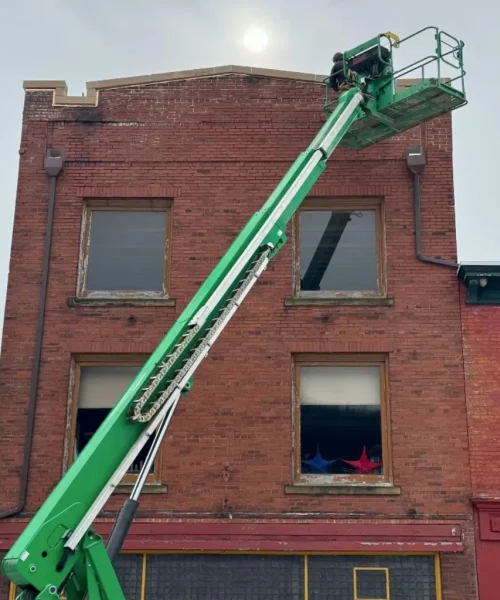
When the historic Maxwell Building was at risk of demolition, the community pushed for preservation, and RTG Solutions delivered a cost-effective roofing plan that kept the structure standing. By carefully repairing and restoring the roof, we balanced modern performance with historic character. Our team handled demolition of the failing roof sections, rebuilt the structural deck, and installed a new EPDM system designed for long-term protection. This project illustrates how commercial roofing isn’t just about preventing leaks; it’s also about preserving the cultural and architectural identity of a community. With a focus on safety, masonry integration, and cost savings, RTG Solutions provided a sustainable alternative to demolition while giving the building decades of new life.
The scope for the approximately 1,200 square foor project required very careful demolition, structural reframing of the roof deck, and a new roofing assembly built to perform predictably through weather and seasonal movement.
Our approach combined mechanically fastened insulation with an adhered EPDM membrane, giving the roof a stable base and a durable waterproofing layer that is well suited for low-slope commercial applications. We also addressed the perimeter and drainage details that tend to decide whether a new roof succeeds or fails, including parapet coping stone work and installation of a new scupper and downspout to move water off the roof cleanly.
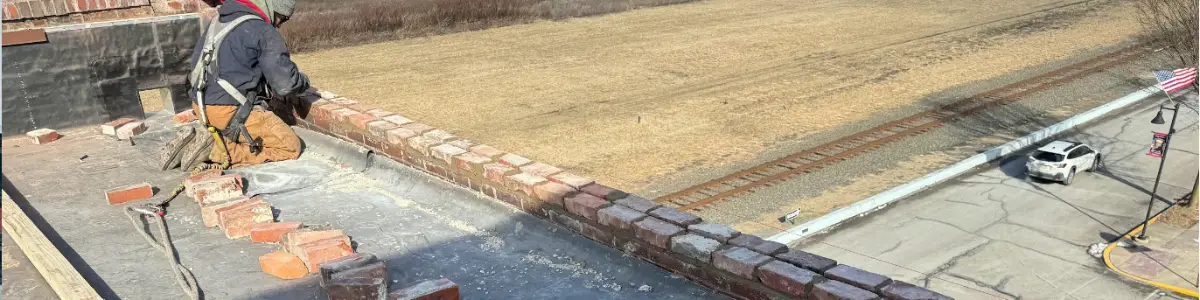
Beyond the roof system itself, we completed tuckpointing and masonry repairs across roughly 500 square feet of brickwork, because water management is not only a roof surface issue. On historic older brick buildings like this one, failing mortar joints and weak parapet conditions can turn a roof problem into a wall problem fast.
This was a publicly bid project, and our proposal came in roughly $200,000 lower than the next bid. We finished under budget, which allowed remaining grant funds to support other improvement work tied to the park and surrounding community efforts. We self-performed 100 percent of the work and drove the project from start in December 2024 through completion on February 12, 2025.
Location
Renovo sits in Central Pennsylvania where buildings take a consistent beating from wind-driven rain, freeze-thaw cycling, and long stretches of cold weather that expose weak details. On a low-slope commercial roof, the biggest risks usually cluster around edges, penetrations, and drainage points. If water does not exit the roof efficiently, it will eventually find a seam, a termination, or a transition that lets it in.
Historic brick buildings add another layer of complexity. The roof edge and parapet are connected systems. If coping, mortar joints, or parapet transitions are compromised, water can work into the wall assembly even if the roof membrane itself is sound. That is why this project paired a new EPDM roof system with masonry restoration and parapet detail work, so the building is protected as a whole envelope, not just “re-roofed” on paper.
Roof System and Materials
The roof assembly was rebuilt from the structure up. We performed full demolition, reframed the roof deck where needed, and installed new decking to restore a stable, buildable surface. That step is often where commercial roof replacement gets real. If the deck is not solid, every layer above it becomes a short-term solution pretending to be permanent.
From there, we installed mechanically fastened insulation to lock in consistent coverage and support long-term performance. We then installed an adhered EPDM membrane as the primary waterproofing layer. EPDM is a proven low-slope commercial roofing material because it handles movement well, delivers dependable waterproofing when detailed correctly, and supports straightforward inspection and maintenance over time.
We also replaced and improved key drainage details, including a new scupper and downspout. A scupper is a roof drain opening that allows water to exit through a parapet wall rather than pooling on the roof surface. On a low-slope roof, that drainage path is not optional. It is the difference between a roof that sheds water and a roof that lives under standing water after every storm.
Finally, we completed parapet coping stone work and tuckpointing and masonry repairs. Tuckpointing restores deteriorated mortar joints so the brickwork remains tight and water resistant. In practical terms, this is how you stop water from entering at the roof edge and migrating through the parapet and wall structure.
About the Client
The Greater Renovo Heritage Park Organization is responsible for protecting and improving spaces that matter to the community. Since RTG is all about our community, we knew that this project had to focus on preserving function, preventing avoidable deterioration, and keeping a facility viable for continued use.
Our role was to deliver a commercial roof replacement that respected the building’s age and construction while solving the real problems: structural deck issues, unreliable waterproofing, weak drainage, and masonry conditions that invite water intrusion. We treated this as a complete roof and edge system rebuild, because that is what the building and the community needed!
Project Scope
- Perform full demolition of the existing low-slope roof area (approximately 1,200 SF)
- Reframe roof deck structure where required and install new roof decking
- Install mechanically fastened insulation to build a stable substrate
- Install an adhered EPDM membrane as the primary low-slope roof system
- Complete parapet coping stone work to strengthen roof edge protection
- Install a new scupper and downspout to improve roof drainage
- Perform tuckpointing and masonry repairs across approximately 500 square feet of brickwork
- Deliver a clean closeout aligned with public bid requirements and long-term serviceability
Learn More About:
Schedule a Commercial Roof Assessment
Need an estimate, scope validation, or documentation for budgeting and planning? Tell us what you are seeing and we will be in touch!
Quality Highlights
We know all too well that a roof replacement only earns its keep if it solves the cause of the failure! On this project, our team focused on structural stability, drainage reliability, and edge conditions, because those are the places where low-slope commercial roofs typically break down first. The result was a roof system that sheds water correctly, can be inspected with confidence, is built to handle seasonal movement without turning into a recurring repair cycle, and stays preserved for the Renovo community!
Deck rebuild that supports a real commercial roof system
We reframed and replaced decking where needed so the new assembly sits on a stable surface. That protects every layer above it and prevents “new roof” problems that are really old deck problems coming back.
EPDM membrane installed as a dependable low-slope waterproofing layer
We paired mechanically fastened insulation with an adhered EPDM membrane to create consistent coverage and durable waterproofing. EPDM is a practical choice for low-slope commercial roof replacement when you want reliability and maintainability.
Edge, drainage, and masonry details handled as one system
We repaired coping and masonry and installed a new scupper and downspout so water exits the roof the way it should. Those details keep water from pooling, slipping behind transitions, or working into parapet brickwork over time.