
Safety Equipment Installation for Commercial Roofs
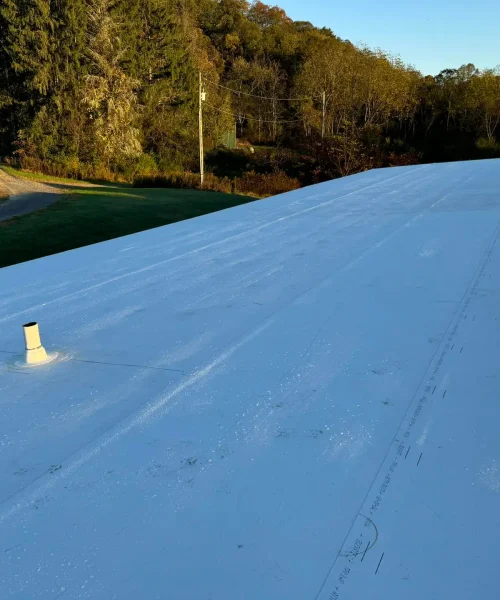
What Do We Mean by Safety Equipment Installation?

RTG Solutions designs, installs, and certifies rooftop safety systems that meet OSHA and ANSI standards. These include roof anchors, lifelines, guardrails, skylight cages, walk pads, and warning-line systems that prevent falls and keep your building compliant. Every system is engineered for 5,000-lb anchor strength, ensuring total safety, documentation, and roof-warranty protection.
What Do We Mean by Safety Equipment Installation?
Rooftop safety equipment refers to the permanent or semi-permanent systems that protect anyone working at height from falls or other hazards. These include roof anchors, horizontal lifelines, guardrails, skylight cages, roof hatch guardrails, access ladder lifelines, wal pads, and/or warning-line systems each designed to keep your team secure and your building OSHA-compliant.
Fall protection is required on any roof with unprotected edges or openings four feet or higher. Guardrails must meet strict dimensional and strength standards, and personal fall-arrest anchors like dee-rings and snaphooks must be engineered or rated for at least 5,000 lbs per user in accordance with OSHA and ANSI guidelines.
Whether you manage a commercial facility, school, or industrial site, RTG Solutions provides the design, installation, and certification of rooftop safety systems that ensure total compliance while preserving your roof’s warranty and performance. Our team delivers turnkey, fully documented fall-protection solutions that let you focus on operations knowing every person on your roof is safe.
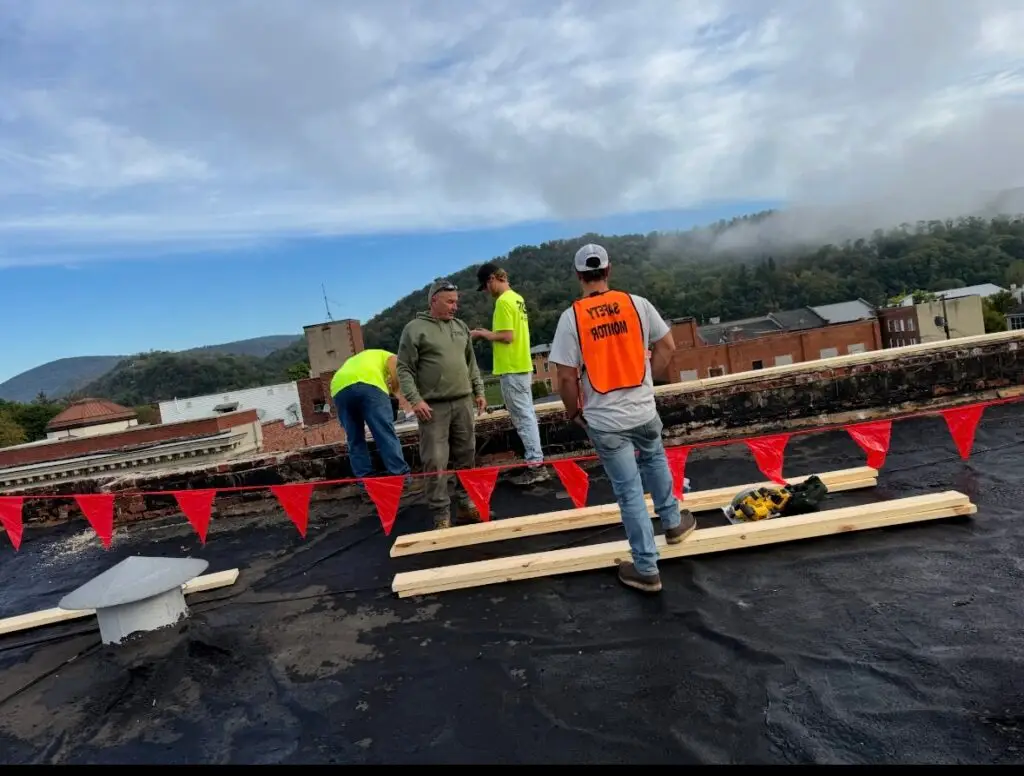
Roof Anchors and Tie-Backs
Permanent single-point anchors and tie-back anchors for PFAS and rope access. We design for structure, provide proof-load testing and tagging, and deliver sealed drawings and owner documentation. Options for steel, concrete, wood, and parapet conditions. (Targets: roof anchor installation, roof anchor point, tie-back anchors)
Guardrails: Freestanding and Parapet-Mounted
Non-penetrating ballasted guardrails preserve warranties on single-ply roofs; parapet-mounted rails provide a clean permanent edge solution. We also install self-closing gates, toe boards, and walkway demarcation.
Ladder and Access Safety
Permanent ladder lifelines, top-exit handholds, and self-closing safety gates at transitions. (Note: OSHA no longer relies on cages as primary fall protection; lifeline systems are the modern control.)
Walkway, Warning-Line and Restraint Zones
Define safe paths with walkway pads, warning lines, and anchored restraint to keep technicians back from edges during routine service.
Systems We Design & Install
RTG Solutions designs and installs OSHA-compliant rooftop safety systems that protect your crews and extend the life of your roof. Our work includes roof anchors, horizontal lifelines, guardrails, skylight screens, hatch guardrails, walkway pads, and ladder access systems all engineered to meet OSHA 1910/1926 and ANSI Z359 standards. Every installation is customized to your facility, ensuring complete fall-protection coverage without compromising roof warranties or aesthetics. From assessment and design through installation, proof-load testing, and certification, RTG delivers a fully documented, turnkey safety solution for commercial and institutional roofs across Pennsylvania.
Why Facility Owners Choose RTG For Their
Safety Installation Needs
We are OSHA/ANSI-Aligned
We design to OSHA 1910/1926 and ANSI/ASSP Z359 guidance for anchorage and lifeline components.
Our Roof-First Approach
Non-penetrating solutions and compatible details to protect EPDM, TPO, PVC, and metal roofs (and keep warranties intact).
Strong Documentation
Sealed drawings (when required), anchor tags, proof-load records, and inspection checklists.
One Team, Start to Finish
Assessment → engineering → install → certification → training—managed by an RTG commercial roofing contractor you know and trust.
Local and Always Responsive
Based in Central PA with fast scheduling across Lock Haven, State College, Williamsport, Harrisburg, Altoona, and neighboring markets, we know our community and how to take care of a commercial roof in Pennsylvania.


Our Safety Installation Process
Every RTG safety installation project follows a proven, step-by-step process built around precision, compliance, and communication. From initial site assessment to final certification, our team ensures your rooftop safety system meets OSHA and ANSI standards without disrupting operations or compromising your roof’s integrity.
Step 1
On-Site Assessment & Inspection
Before any safety installation project, we measure hazards (edges, openings, access), roof type, structure, and work tasks.
Step 2
Engineering and Required Submittals
System layout, load calc’s, connection details, and product data; coordinate with roof manufacturer to preserve warranties.
Step 3
Installation by an RTG Commercial Roofing Expert
Low-impact penetration methods where required; non-penetrating options where possible.
Step 4
Proof-Load, Tag & Document
Function testing/torque/proof-load as applicable; tag each anchor, deliver as-builts, owner manuals, and inspection log sheets.
Step 5
Training & Annual Inspections
User training and scheduled inspections to keep equipment compliant for the life of the roof. (OSHA provides guidance on selection, use, inspection of personal fall-protection systems.
Step 1
On-Site Assessment & Inspection
Before any safety installation project, we measure hazards (edges, openings, access), roof type, structure, and work tasks.
Step 2
Engineering and Required Submittals
System layout, load calc’s, connection details, and product data; coordinate with roof manufacturer to preserve warranties.
Step 3
Installation by an RTG Commercial Roofing Expert
Low-impact penetration methods where required; non-penetrating options where possible.
Step 4
Proof-Load, Tag & Document
Function testing/torque/proof-load as applicable; tag each anchor, deliver as-builts, owner manuals, and inspection log sheets.
Step 5
Training & Annual Inspections
User training and scheduled inspections to keep equipment compliant for the life of the roof. (OSHA provides guidance on selection, use, inspection of personal fall-protection systems.
Safety Installation FAQs
Safety Installation FAQs
OSHA requires fall protection on walking-working surfaces 4 ft or higher in general industry and when working 15 feet or more from a roof’s edge, OSHA requires each worker be protected from falling by various systems. On roofs that means protecting unprotected edges (guardrail, fall-arrest, or restraint), guarding skylights/roof holes, and securing access points like hatches and ladders. RTG typically recommends a mix of guardrails, skylight screens, roof-hatch guardrails, and anchors/HLLs where tasks occur near edges, but it all depends on your roof.
Yes. OSHA treats skylights like roof openings. They must be covered or guarded, or workers must use fall-arrest/restraint when exposure exists. RTG installs rated skylight screens or cages and can tie them into a broader fall-protection plan.
For personal fall-arrest, OSHA/ANSI allow either an anchorage capable of 5,000 lb per attached worker or an engineered anchorage system designed by a qualified person with required safety factors. We design, install, and proof-load anchors and tag them with use ratings.
For roofers, technicians, or anyone works near edges regularly, guardrails provide passive, training-light protection with minimal user actions. Where rails aren’t feasible or appearance is a concern, an HLL or travel-restraint offers continuous tie-off. We often mix strategies: rails at roof hatches and frequently serviced edges, HLLs for long runs.
Do a competent-person visual inspection before each use, have a periodic documented inspection (often annually, or per manufacturer), and perform proof-load/re-certification after major events, modifications, or as required by the system manufacturer/engineer. RTG supplies an inspection schedule and log with every project.
Often, yes, but it does depend. Freestanding/ballasted guardrails and some walkway/warning-line systems require no penetrations. Where anchors or lifelines need structure, we use compatible details, sealants, and manufacturer-approved methods to protect warranties and stop leaks.